

Retainers vs Braces: Which is Best?

retainers vs braces

When it comes to achieving a beautiful, healthy smile, orthodontic treatment plays a crucial role. Two of the most common tools in an orthodontist's toolkit are braces and retainers. Each serves a distinct purpose, and understanding their differences is key to making an informed decision about your orthodontic journey.


Both retainers and braces serve different purposes in orthodontic treatment, so it's not a matter of one being better than the other. Learn here the fundamental distinctions between retainers and braces, and when each might be the best option for you.


What are Braces

Braces are orthodontic devices used to correct misalignment and irregularities of the teeth and jaws. They consist of brackets, wires, and bands that work together to apply gentle pressure on the teeth, gradually moving them into the desired position. Braces can be made of metal or ceramic materials and are typically worn for a certain period of time, usually a few months to a few years, depending on the severity of the orthodontic issues.


Braces are typically used to correct various dental misalignments and bite issues. They involve bonding brackets to the teeth and connecting them with wires that exert pressure to gradually move the teeth into proper alignment. Braces are highly effective for complex dental problems, but the treatment duration can be longer (often 1-3 years) and they require regular adjustments by an orthodontist.


What are Retainers

Retainers are orthodontic devices that are custom-made and usually made of metal, plastic, or a combination of both. They are typically prescribed by orthodontists after the braces are removed to help maintain the straightened position of the teeth and prevent them from shifting back to their original position.


There are two main types of retainers: removable and fixed.


1. Removable retainers: These are removable devices that can be taken out for eating, brushing, and flossing. They are usually made of plastic or silicone and are custom-fit to the patient's teeth. Removable retainers are commonly worn full-time initially and then gradually reduced to only wearing them at night.

2. Fixed retainers: These are thin wires that are bonded to the back of the teeth using dental adhesive. They are not removable and provide a continuous force to keep the teeth in their correct position. Fixed retainers are typically used for the lower front teeth, which are more prone to relapse.


Both types of retainers require regular cleaning and maintenance to ensure their effectiveness. It is essential to follow the orthodontist's instructions on wearing and caring for retainers to ensure long-term stability of the teeth.


Comparison

Retainers and braces are both orthodontic devices used to straighten teeth and correct bite issues. However, they function differently and are used at different stages of treatment.


1. Purpose

  • Braces: Braces are primarily used to straighten crooked teeth, close gaps, and correct bite problems. They apply continuous pressure on the teeth to move them into proper alignment.
  • Retainers: Retainers are mainly used to maintain the results achieved through braces or other orthodontic treatments. They help hold the teeth in their new positions and prevent them from shifting back.

2. Design

  • Braces: Braces consist of brackets, wires, and bands. The brackets are bonded to the teeth, and the wires and bands exert pressure on the brackets to move the teeth into alignment.
  • Retainers: Retainers can be removable or fixed. Removable retainers are typically made of plastic or acrylic material and are custom-fitted to the shape of the teeth. They are worn over the teeth. Fixed retainers are thin wires that are usually bonded to the back of the teeth to hold them in place.

3. Treatment Duration

  • Braces: Braces are typically worn for an extended period, often ranging from months to a few years, depending on the severity of the orthodontic issues being addressed.
  • Retainers: Retainers are usually worn for a longer period than braces. Initially, they are worn full-time and then gradually transitioned to only nighttime wear. Some individuals may need to wear retainers for an indefinite period to prevent teeth from shifting.

4. Comfort and Aesthetics

  • Braces: Braces can cause discomfort due to the pressure applied to the teeth, and they may irritate the inside of the mouth. Braces are visible and can affect one's appearance during the treatment period.
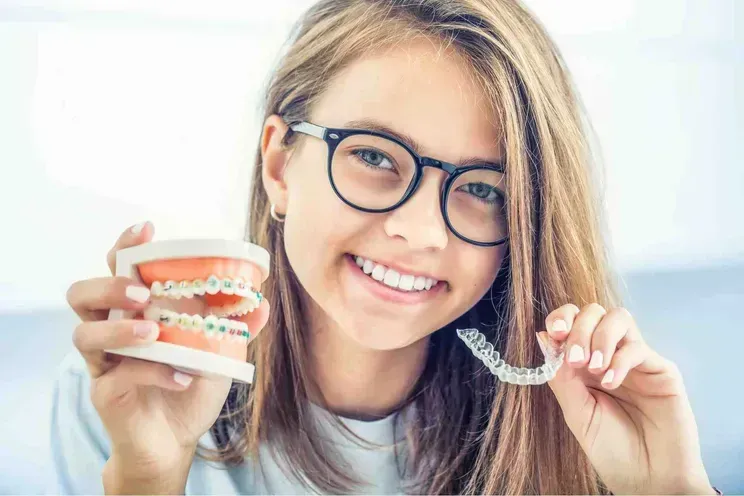
  • Retainers: Retainers are generally more comfortable to wear compared to braces, as their purpose is to maintain tooth alignment rather than actively move the teeth. Clear, removable retainers are available, which are less noticeable than traditional braces.

5. Maintenance

  • Braces: Braces require regular adjustments and cleaning routines. Special brushes and flossing tools may be needed to properly clean between the brackets and wires.
  • Retainers: Retainers should be cleaned daily using a toothbrush and mild soap or denture cleaner. Removable retainers should be stored properly when not in use.

Follow Dentists Recommendation

Ultimately, orthodontists or dentists can evaluate your dental condition and recommend the best option for you. Often, braces are used as the primary treatment, followed by retainers to maintain the achieved alignment.


It's crucial to follow your orthodontist's recommendations regarding the use of both braces and retainers to achieve the best possible outcome for your dental health.

What to Look for in Pediatric Dentists?
March 11, 2026
You want a pediatric dentist who blends skill, safety, and a kid-first approach. Start by checking credentials and how they guide anxious children.
What to Expect from an Emergency Pediatric Dentist Visit?
March 9, 2026
When your child needs an emergency pediatric dentist, you want clear steps and calm guidance. You’ll check symptoms, call ahead, and prepare for a focused exam that targets pain and potential trauma.
Essential Questions to Ask Your Pediatric Dentist Near Me?
March 6, 2026
You want a pediatric dentist who’s qualified, patient, and prepared—but how do you know before the first appointment? Ask about credentials, behavior guidance
What to Know About Choosing a Pediatric Dentist?
March 4, 2026
You want a pediatric dentist who’s qualified, gentle, and practical—but knowing what to check can feel murky. You’ll weigh credentials, office vibe, behavior guidance, sedation safety, and preventive care like sealants or SDF.
How to Help a Nervous Child at the Dentist: Tips for a Stress-Free Visit
February 9, 2026
Taking your child to the dentist can often feel daunting, especially if they're anxious about the visit.
Understanding Pediatric Orthodontics: Signs Your Child May Need Braces
February 6, 2026
As a parent, spotting the signs that your child might need braces can be challenging.
The Complete Guide to Cavity Prevention in Children
February 4, 2026
When it comes to your child's dental health, establishing strong oral hygiene practices is crucial.
When Should My Child First Visit the Dentist? A Parent’s Guide
February 2, 2026
As a parent, you might wonder when the right time is for your child's first dental visit.
The Role of Pediatric Dentists in Supporting Children with Special Needs
January 12, 2026
When it comes to children with special needs, pediatric dentists play a crucial role in addressing their unique dental requirements.
Top Dental Challenges for Kids with Autism & How to Overcome Them
January 9, 2026
When it comes to dental visits, kids with autism often face unique challenges that can make the experience overwhelming.